
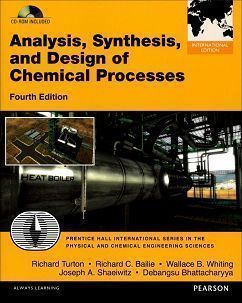
Analysis, Synthesis and Design of Chemical Processes 4/e
售價
$
1,350
- 一般書籍
- ISBN:9780132940290
- 作者:Turton, Bailie, Whiting, Shaeiwitz, Bhattacharyya
- 版次:4
- 年份:2013
- 出版商:Pearson Education
書籍介紹
本書特色
目錄
Description
Process design is the focal point of chemical engineering practice: the creative activity through which engineers continuously improve facility operations to create products that enhance life. Effective chemical engineering design requires students to integrate a broad spectrum of knowledge and intellectual skills, so they can analyze both the big picture and minute details - and know when to focus on each. Through three previous editions, this book has established itself as the leading resource for students seeking to apply what they've learned in real-world, open-ended process problems. The authors help students hone and synthesize their design skills through expert coverage of preliminary equipment sizing, flowsheet optimization, economic evaluation, operation and control, simulation, and other key topics. This new Fourth Edition is extensively updated to reflect new technologies, simulation techniques, and process control strategies, and to include new pedagogical features including concise summaries and end-of-chapter lists of skills and knowledge.
Process design is the focal point of chemical engineering practice: the creative activity through which engineers continuously improve facility operations to create products that enhance life. Effective chemical engineering design requires students to integrate a broad spectrum of knowledge and intellectual skills, so they can analyze both the big picture and minute details - and know when to focus on each. Through three previous editions, this book has established itself as the leading resource for students seeking to apply what they've learned in real-world, open-ended process problems. The authors help students hone and synthesize their design skills through expert coverage of preliminary equipment sizing, flowsheet optimization, economic evaluation, operation and control, simulation, and other key topics. This new Fourth Edition is extensively updated to reflect new technologies, simulation techniques, and process control strategies, and to include new pedagogical features including concise summaries and end-of-chapter lists of skills and knowledge.
Features
New to This Edition
- The #1 chemical process design guide, used by 60% of chemical engineering departments: updated with new techniques and control strategies
- A proven tool for helping students integrate process knowledge to start solving open-ended problems
- Updated with improved pedagogy throughout, including four new case studies on simulation in design
- Includes new advanced chapters on both steady state and dynamic simulators
- Adds expanded coverage of lower- and higher-level process control strategies, including MPC
- Companion website: che.cemr.wvu.edu/publications/projects/
New to This Edition
- A new chapter (Chapter 16) entitled “Advanced Topics Using Steady State Simulators” has been added. The inclusion of this chapter strenghtens coverage of advanced concepts in process simulation. This chapter broadens the coverage currently given in Chapter 13 (and to a lesser extent Chapter 12) and makes the text more attractive to those schools who emphasize the use of process simulators in their design courses. The new chapter is written to address aspects from most of the common simulators, i.e., Chemcad, Aspen Plus, Hysys, and Pro/II. The chapter is not written for any specific simulator, but section 16.7 addresses the different advanced options available in the different simulators.
- A new chapter (Chapter 17) has been added entitled “Using Dynamic Simulators in Process Design.” The addition of his chapter represents the first time that dynamic simulators are covered in standard design texts. The key concepts for developing dynamic simulations with commercial dynamic simulators, critical dynamic data needed for representative transient response, and troubleshooting the dynamic simulators are addressed in this chapter. In addition, the approach to transient analysis and its application to determining basic and advanced control structures for chemical processes are addressed in this chapter and in the revamped Chapter 18.
- Old Chapter 21 entitled “Regulating Process Conditions” has been revamped as the new Chapter 18, entitled “Regulation and Control of Chemical Processes with Applications Using Commercial Software.” The emphasis of this chapter is to introduce additional information on basic (lower-level) control strategies for processes and to expand this information to higher levels of control, such as model-predictive control (MPC). In addition, the key concepts of logic control and various implementation strategies are discussed. This material complements the material in Chapter 17 on dynamic simulation and introduce new material on the design of control systems for chemical processes. Finally, the topic of operator training simulators (OTS) is introduced, and examples of how all the material in Chapters 16-18 are used in conjunction to develop a real-time simulation of a chemical process for training plant operators. A brief coverage and overview of OTS systems has been added to Chapter 1 after the section on 3-D plant models.
- New pedagogy has been added to all chapters. Each chapter starts with a paragraph or two (in a shaded box) with information for the instructor and student on what the learning outcomes of the chapter are. Likewise, each chapter concludes with a list of the specific skills and knowledge that the student should take away with them.
- Four new case studies have been added to Appendix B that emphasize and illustrate the new concepts introduced in Chapters 16 and 17. These case studies may differ slightly in format from the existing case studies because of the increased emphasis on the simulation aspects of these processes. Other case studies may also be added.
- Appendix B has been moved to the CD in order to make room for the additional new material in Chapters 16-18
- The trim size has changed from 7 x 9 1/4 to 8 x 10.
Table of Contents
Section I: Conceptualization and Analysis of Chemical Processes
Chapter 1: Diagrams for Understanding Chemical Processes
Chapter 2: The Structure and Synthesis of Process Flow Diagrams
Chapter 3: Batch Processing
Chapter 4: Chemical Product Design
Chapter 5: Tracing Chemicals through the Process Flow Diagram
Chapter 6: Understanding Process Conditions
Section II: Engineering Economic Analysis of Chemical Processes
Chapter 7: Estimation of Capital Costs
Chapter 8: Estimation of Manufacturing Costs
Chapter 9: Engineering Economic Analysis
Chapter 10: Profitability Analysis
Section III: Synthesis and Optimization of Chemical Processes
Chapter 11: Utilizing Experience-Based Principles to Confirm the Suitability of a Process Design
Chapter 12: Synthesis of the PFD from the Generic BFD
Chapter 13: Synthesis of a Process Using a Simulator and Simulator Troubleshooting
Chapter 14: Process Optimization
Chapter 15: Pinch Technology
Chapter 16: Advanced Topics Using Steady-State Simulators
Chapter 17: Using Dynamic Simulators in Process Design
Chapter 18: Regulation and Control of Chemical Processes with Applications Using Commercial Software
Section IV: Analysis Of Process Performance
Chapter 19: Process Input/Output Models
Chapter 20: Tools for Evaluating Process Performance
Chapter 21: Performance Curves for Individual Unit Operations
Chapter 22: Performance of Multiple Unit Operations
Chapter 23: Reactor Performance
Chapter 24: Process Troubleshooting and Debottlenecking
Section V: The Impact of Chemical Engineering Design on Society
Chapter 25: Ethics and Professionalism
Chapter 26: Health, Safety, and the Environment
Chapter 27: Green Engineering
Section VI: Interpersonal And Communication Skills
Chapter 28: Teamwork
Section I: Conceptualization and Analysis of Chemical Processes
Chapter 1: Diagrams for Understanding Chemical Processes
Chapter 2: The Structure and Synthesis of Process Flow Diagrams
Chapter 3: Batch Processing
Chapter 4: Chemical Product Design
Chapter 5: Tracing Chemicals through the Process Flow Diagram
Chapter 6: Understanding Process Conditions
Section II: Engineering Economic Analysis of Chemical Processes
Chapter 7: Estimation of Capital Costs
Chapter 8: Estimation of Manufacturing Costs
Chapter 9: Engineering Economic Analysis
Chapter 10: Profitability Analysis
Section III: Synthesis and Optimization of Chemical Processes
Chapter 11: Utilizing Experience-Based Principles to Confirm the Suitability of a Process Design
Chapter 12: Synthesis of the PFD from the Generic BFD
Chapter 13: Synthesis of a Process Using a Simulator and Simulator Troubleshooting
Chapter 14: Process Optimization
Chapter 15: Pinch Technology
Chapter 16: Advanced Topics Using Steady-State Simulators
Chapter 17: Using Dynamic Simulators in Process Design
Chapter 18: Regulation and Control of Chemical Processes with Applications Using Commercial Software
Section IV: Analysis Of Process Performance
Chapter 19: Process Input/Output Models
Chapter 20: Tools for Evaluating Process Performance
Chapter 21: Performance Curves for Individual Unit Operations
Chapter 22: Performance of Multiple Unit Operations
Chapter 23: Reactor Performance
Chapter 24: Process Troubleshooting and Debottlenecking
Section V: The Impact of Chemical Engineering Design on Society
Chapter 25: Ethics and Professionalism
Chapter 26: Health, Safety, and the Environment
Chapter 27: Green Engineering
Section VI: Interpersonal And Communication Skills
Chapter 28: Teamwork
