

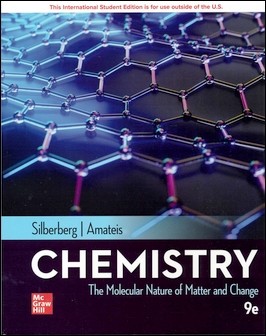
(VitalSource eBook) Chemistry: The Molecular Nature of Matter and Change 10/e
- ◉ VitalSource◉ 閱讀期限:Lifetime
售價
$
1,000
- 電子書
- ISBN:9781266321375
- 作者:Martin Silberberg, Patricia Amateis
- 版次:10
- 年份:2025
- 出版商:McGraw-Hill
- 頁數/規格:電子書
書籍介紹
目錄
►VitalSource 電子書購買須知:
Description
Chemistry: The Molecular Nature of Matter and Change by Martin Silberberg and Patricia Amateis has been recognized in the general chemistrymarket as an unparalleled classic. The revision for the ninth edition focusedon continued optimization of the text. To aid in this process, we wereable to use data from literally thousands of student responses to questions inLearnSmart, the adaptive learning system that assesses student knowledge ofcourse content. The data, such as average time spent answering eachquestion and the percentage of students who correctly answered the question onthe first attempt, revealed the learning objectives that students foundparticularly difficult, which we addressed by revising surrounding text oradding additional learning resources such as videos and slideshows. The textstill contains unprecedented macroscopic-to-microscopic molecularillustrations, consistent step-by-step worked exercises in every chapter, andan extensive range of end-of-chapter problems, which provide engagingapplications covering a wide variety of interests, including engineering,medicine, materials, and environmental studies. Changes have been made to thetext and applications throughout to make them more succinct, to the artwork tomake it more teachable and modern, and to the design to make it more simplisticand open.
- 閱讀期限:Lifetime
- 電子書兌換碼將於 3-5 個工作天,寄送至「序號寄送 E-mail」所填寫的信箱。
- 根據消費者保護法第 19 條第 1 項規定,本產品為數位內容,售出後恕不接受退貨或退款。
- 本產品僅限台灣境內使用,海外 IP 無法註冊或啟用。
- 電子書平台登錄與註冊說明 (eText-Register.pdf)。
- 電子書平台操作手冊 (eText-Manual.pdf)。
- 如有任何問題,請 Email 至 ebook@tunghua.com.tw。
Description
Chemistry: The Molecular Nature of Matter and Change by Martin Silberberg and Patricia Amateis has been recognized in the general chemistrymarket as an unparalleled classic. The revision for the ninth edition focusedon continued optimization of the text. To aid in this process, we wereable to use data from literally thousands of student responses to questions inLearnSmart, the adaptive learning system that assesses student knowledge ofcourse content. The data, such as average time spent answering eachquestion and the percentage of students who correctly answered the question onthe first attempt, revealed the learning objectives that students foundparticularly difficult, which we addressed by revising surrounding text oradding additional learning resources such as videos and slideshows. The textstill contains unprecedented macroscopic-to-microscopic molecularillustrations, consistent step-by-step worked exercises in every chapter, andan extensive range of end-of-chapter problems, which provide engagingapplications covering a wide variety of interests, including engineering,medicine, materials, and environmental studies. Changes have been made to thetext and applications throughout to make them more succinct, to the artwork tomake it more teachable and modern, and to the design to make it more simplisticand open.
Table of Contents
1 Keys to the Studying Chemistry: Definitions, Units, and Problem Solving
2 The Components of Matter
3 Stoichiometry of Formulas and Equations
4 The Major Classes of Chemical Reactions
5 Gases and the Kinetic-Molecular Theory
6 Thermochemistry: Energy Flow and Chemical Change
7 Quantum Theory and Atomic Structure
8 Electron Configuration and Chemical Periodicity
9 Models of Chemical Bonding
10 The Shapes of Molecules
11 Theories of Covalent Bonding
12 Intermolecular Forces: Liquids, Solids, and Phase Changes
13 The Properties of Mixtures: Solutions and Colloids
14 Periodic Patterns in the Main-Group Elements
15 Organic Compounds and the Atomic Properties of Carbon
16 Kinetics: Rates and Mechanisms of Chemical Reactions
17 Equilibrium: The Extent of Chemical Reactions
18 Acid-Base Equilibria
19 Ionic Equilibria in Aqueous Systems
20 Thermodynamics: Entropy, Free Energy, and Reaction Direction
21 Electrochemistry: Chemical Change and Electrical Work
22 The Elements in Nature and Industry
23 Transition Elements and Their Coordination Compounds
24 Nuclear Reactions and Their Applications
Appendix A Common Mathematical Operations in Chemistry
Appendix B Standard Thermodynamic Values for Selected Substances
Appendix C Equilibrium Constants for Selected Substances
Appendix D Standard Electrode (Half-Cell) Potentials
Appendix E Answers to Selected Problems
Glossary
Index
1 Keys to the Studying Chemistry: Definitions, Units, and Problem Solving
2 The Components of Matter
3 Stoichiometry of Formulas and Equations
4 The Major Classes of Chemical Reactions
5 Gases and the Kinetic-Molecular Theory
6 Thermochemistry: Energy Flow and Chemical Change
7 Quantum Theory and Atomic Structure
8 Electron Configuration and Chemical Periodicity
9 Models of Chemical Bonding
10 The Shapes of Molecules
11 Theories of Covalent Bonding
12 Intermolecular Forces: Liquids, Solids, and Phase Changes
13 The Properties of Mixtures: Solutions and Colloids
14 Periodic Patterns in the Main-Group Elements
15 Organic Compounds and the Atomic Properties of Carbon
16 Kinetics: Rates and Mechanisms of Chemical Reactions
17 Equilibrium: The Extent of Chemical Reactions
18 Acid-Base Equilibria
19 Ionic Equilibria in Aqueous Systems
20 Thermodynamics: Entropy, Free Energy, and Reaction Direction
21 Electrochemistry: Chemical Change and Electrical Work
22 The Elements in Nature and Industry
23 Transition Elements and Their Coordination Compounds
24 Nuclear Reactions and Their Applications
Appendix A Common Mathematical Operations in Chemistry
Appendix B Standard Thermodynamic Values for Selected Substances
Appendix C Equilibrium Constants for Selected Substances
Appendix D Standard Electrode (Half-Cell) Potentials
Appendix E Answers to Selected Problems
Glossary
Index
同系列書籍

普通化學,9789814646826

