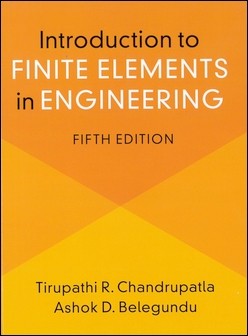
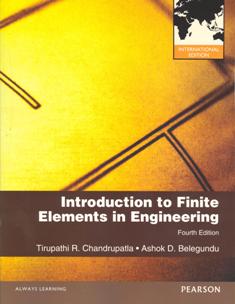
Introduction to Finite Elements in Engineering 3/e
售價
$
1,150
- 一般書籍
- ISBN:9780131784536
- 作者:Tirupathi R. Chandrupatla, Ashok D. Belegundu
- 版次:3
- 年份:2002
- 出版商:Pearson Education
- 頁數/規格:453頁/平裝單色
書籍介紹
本書特色
目錄
作者介紹
Description
This book provides an integrated approach to finite element methodologies. The development of finite element theory is combined with examples and exercises involving engineering applications. The steps used in the development of the theory are implemented in complete, self-contained computer programs. While the strategy and philosophy of the previous editions has been retained, the Third Edition has been updated and improved to include new material on additional topics.
This book provides an integrated approach to finite element methodologies. The development of finite element theory is combined with examples and exercises involving engineering applications. The steps used in the development of the theory are implemented in complete, self-contained computer programs. While the strategy and philosophy of the previous editions has been retained, the Third Edition has been updated and improved to include new material on additional topics.
Features
- Deep, comprehensive treatment of theory-Reveals several different aspects of finite elements analysis development.
* Provides the needed steps toward clear understanding, presentation, and computer implementation. - Practical engineering situations-Presented as both examples and exercises.
* Brings the students more real-life situations and enables professors to discuss and assign real engineering problems. - Integration of over 250 illustrations throughout the text-Provide visual representations of principles and practices discussed.
* Helps the student understand the presentation and helps the professors in their presentations. - Emphasis on problem formulation and modeling in each chapter.
* Helps students develop a firm understanding of these critical skills. - Theory and computer programs for preprocessing and postprocessing.
* Allows professors to assign large problems and students to prepare and display data efficiently and effectively.
Table of Contents
1. Fundamental Concepts.
2. Matrix Algebra and Gaussian Elimination.
3. One-Dimensional Problems.
4. Trusses.
5. Two-Dimensional Problems Using Constant Strain Triangles.
6. Axisymmetric Solids Subjected to Axisymmetric Loading.
7. Two-Dimensional Isoparametric Elements and Numerical Integration.
8. Beams and Frames.
9. Three-Dimensional Problems in Stress Analysis.
10. Scalar Field Problems.
11. Dynamic Considerations.
12. Preprocessing and Postprocessing.
1. Fundamental Concepts.
2. Matrix Algebra and Gaussian Elimination.
3. One-Dimensional Problems.
4. Trusses.
5. Two-Dimensional Problems Using Constant Strain Triangles.
6. Axisymmetric Solids Subjected to Axisymmetric Loading.
7. Two-Dimensional Isoparametric Elements and Numerical Integration.
8. Beams and Frames.
9. Three-Dimensional Problems in Stress Analysis.
10. Scalar Field Problems.
11. Dynamic Considerations.
12. Preprocessing and Postprocessing.
Tirupathi R. Chandrupatla, Rowan University
Ashok D. Belegundu, Pennsylvania State University
Ashok D. Belegundu, Pennsylvania State University