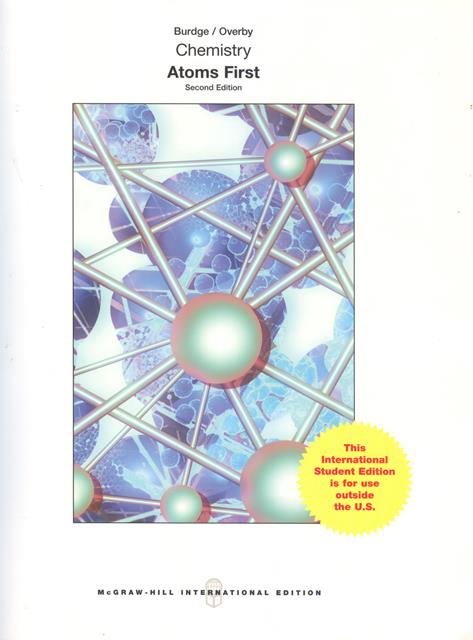
Chemistry: Atoms First 2/e
售價
$
1,300
- 一般書籍
- ISBN:9781259252174
- 作者:Julia Burdge, Jason Overby
- 版次:2
- 年份:2015
- 出版商:McGraw-Hill
- 頁數/規格:1126頁/平裝彩色
書籍介紹
本書特色
目錄
Description
The atoms first approach provides a consistent and logical method for teaching general chemistry. This approach starts with the fundamental building block of matter, the atom, and uses it as the stepping stone to understanding more complex chemistry topics. Once mastery of the nature of atoms and electrons is achieved, the formation and properties of compounds are developed. Only after the study of matter and the atom will students have sufficient background to fully engage in topics such as stoichiometry, kinetics, equilibrium, and thermodynamics. Thus, the Atoms First method empowers instructors to present the most complete and compelling story of general chemistry.
Julia Burdge is renowned for setting chemistry in interesting, relevant context; and for her engaging, conversational writing style--presenting chemistry in a way students can appreciate and understand; while satisfying instructors' requirements for rigor, accuracy, and comprehensive coverage. Jason Overby teaches general chemistry using an atoms-first approach, bringing a unique perspective and years of experience to the development of this new project. Far from a simple re-ordering of topics, this is a book that will truly meet the needs of the growing atoms-first market. Together, these authors have developed a product with the same engaging writing style, modern and descriptive artwork, sound problem-solving approach and wide range of end-of-chapter problems that customers are accustomed to with the Burdge/Chemistry product. Jason Overbya™s involvement with this project was crucial as he has been teaching with this approach for over four years which allowed Julia and Jason to create a product that fits the need for this growing market.
The atoms first approach provides a consistent and logical method for teaching general chemistry. This approach starts with the fundamental building block of matter, the atom, and uses it as the stepping stone to understanding more complex chemistry topics. Once mastery of the nature of atoms and electrons is achieved, the formation and properties of compounds are developed. Only after the study of matter and the atom will students have sufficient background to fully engage in topics such as stoichiometry, kinetics, equilibrium, and thermodynamics. Thus, the Atoms First method empowers instructors to present the most complete and compelling story of general chemistry.
Julia Burdge is renowned for setting chemistry in interesting, relevant context; and for her engaging, conversational writing style--presenting chemistry in a way students can appreciate and understand; while satisfying instructors' requirements for rigor, accuracy, and comprehensive coverage. Jason Overby teaches general chemistry using an atoms-first approach, bringing a unique perspective and years of experience to the development of this new project. Far from a simple re-ordering of topics, this is a book that will truly meet the needs of the growing atoms-first market. Together, these authors have developed a product with the same engaging writing style, modern and descriptive artwork, sound problem-solving approach and wide range of end-of-chapter problems that customers are accustomed to with the Burdge/Chemistry product. Jason Overbya™s involvement with this project was crucial as he has been teaching with this approach for over four years which allowed Julia and Jason to create a product that fits the need for this growing market.
Features
- The thermochemistry/thermodynamics coverage has been redesigned with a truly logical, atoms-first approach. The 2E table of contents keeps thermochemistry in its original position at Chapter 10, maintaining the logical narrative flow of stoichiometry (Chapter 8) and solution chemistry (Chapter 9), and places thermodynamics at Chapter 14, ahead of both kinetics and equilibrium coverage. The placement of thermodynamics in Chapter 14 provides the ideal prelude to chemical equilibrium (Chapters 15-17) and Electrochemistry (Chapter 18). Chemical equilibrium is introduced as a phenomenon driven by thermodynamics. The placement of thermodynamics in chapter 14 also allows for alignment with the ACS exam, as a second-semester topic.
- Intermolecular forces are introduced earlier in the second edition, in chapter 7 (rather than in chapter 12 from the 1E).
- Practice Problem “C” added to the consistent problem-solving skill development. Burdge/Overby fosters a consistent problem-solving approach providing the skill set for students to master the basics of critical thinking. Each Worked Example is followed by three practice problems. Practice Problem "A" allows the student to solve the problem using the same steps in the Sample Problem above. Practice Problem "B" probes comprehension of the same concept as Practice Problem "A", but is generally sufficiently different that it cannot be solved using the exact approach that is used in the Worked Example. Practice Problem “C” probes the student’s conceptual understanding of the material.
- A description of each Key Equation helps students identify and understand the purpose of each equation, including how to apply it and when it is appropriate to do so.
Table of Contents
Chapter 1—Chemistry: The Science of Change
Chapter 2—Atoms and the Periodic Table
Chapter 3—Quantum Theory and the Electronic Structure of Atoms
Chapter 4—Periodic Trends of the Elements
Chapter 5—Ionic and Covalent Compounds
Chapter 6— Representing Molecules
Chapter 7—Molecular Geometry, Intermolecular Forces, and Bonding Theories
Chapter 8—Chemical Reactions
Chapter 9—Chemical Reactions in Aqueous Solutions
Chapter 10—Energy Changes in Chemical Reactions
Chapter 11—Gases
Chapter 12—Liquids and Solids
Chapter 13—Physical Properties of Solutions
Chapter 14—Entropy and Free Energy
Chapter 15—Chemical Equilibrium
Chapter 16—Acids, Bases, and Salts
Chapter 17—Acid-Base Equilibria and Solubility Equilibria
Chapter 18—Electrochemistry
Chapter 19—Chemical Kinetics
Chapter 20—Nuclear Chemistry
Chapter 21—Metallurgy and the Chemistry of Metals
Chapter 22—Coordination Chemistry
Chapter 23—Organic Chemistry
Chapter 24—Modern Materials
Chapter 25—ONLINE ONLY: Nonmetallic Elements and Their Compounds
Chapter 1—Chemistry: The Science of Change
Chapter 2—Atoms and the Periodic Table
Chapter 3—Quantum Theory and the Electronic Structure of Atoms
Chapter 4—Periodic Trends of the Elements
Chapter 5—Ionic and Covalent Compounds
Chapter 6— Representing Molecules
Chapter 7—Molecular Geometry, Intermolecular Forces, and Bonding Theories
Chapter 8—Chemical Reactions
Chapter 9—Chemical Reactions in Aqueous Solutions
Chapter 10—Energy Changes in Chemical Reactions
Chapter 11—Gases
Chapter 12—Liquids and Solids
Chapter 13—Physical Properties of Solutions
Chapter 14—Entropy and Free Energy
Chapter 15—Chemical Equilibrium
Chapter 16—Acids, Bases, and Salts
Chapter 17—Acid-Base Equilibria and Solubility Equilibria
Chapter 18—Electrochemistry
Chapter 19—Chemical Kinetics
Chapter 20—Nuclear Chemistry
Chapter 21—Metallurgy and the Chemistry of Metals
Chapter 22—Coordination Chemistry
Chapter 23—Organic Chemistry
Chapter 24—Modern Materials
Chapter 25—ONLINE ONLY: Nonmetallic Elements and Their Compounds