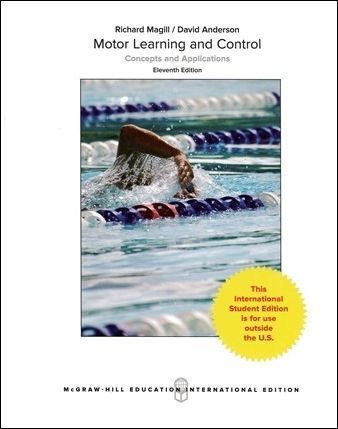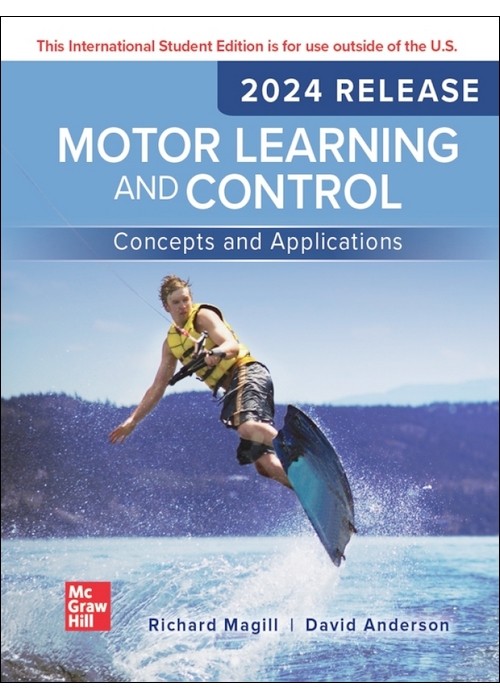
(VitalSource eBook) Motor Learning and Control: Concepts and Applications 13/e 2024 Release
- ◉ VitalSource◉ 閱讀期限:Lifetime
售價
$
1,000
- 電子書
- ISBN:9781264493593
- 作者:Richard Magill, David Anderson
- 版次:13 (2024 Release)
- 年份:2025
- 出版商:McGraw-Hill
- 頁數/規格:電子書
書籍介紹
目錄
作者介紹
►VitalSource 電子書購買須知:
Description
Magill’s Motor Learning and Control: Concepts and Applications introduces the study of motor learning and control to students pursuing careers in exercise science, physical education, and other movement-oriented fields. Each chapter presents motor learning and control as a set of principles and guidelines based on research evidence. Recent scholarship is interpreted and used to explore core concepts and basic theory. Application Problems guide students to consider real-world applications of the theory and research they have studied. The authors’ clear writing style and practical applications will help students build a solid foundation and prepare them for further exploration on their own.
- 閱讀期限:Lifetime
- 電子書兌換碼將於 3-5 個工作天,寄送至「序號寄送 E-mail」所填寫的信箱。
- 根據消費者保護法第 19 條第 1 項規定,本產品為數位內容,售出後恕不接受退貨或退款。
- 本產品僅限台灣境內使用,海外 IP 無法註冊或啟用。
- 電子書平台登錄與註冊說明 (eText-Register.pdf)。
- 電子書平台操作手冊 (eText-Manual.pdf)。
- 如有任何問題,請 Email 至 ebook@tunghua.com.tw。
Description
Magill’s Motor Learning and Control: Concepts and Applications introduces the study of motor learning and control to students pursuing careers in exercise science, physical education, and other movement-oriented fields. Each chapter presents motor learning and control as a set of principles and guidelines based on research evidence. Recent scholarship is interpreted and used to explore core concepts and basic theory. Application Problems guide students to consider real-world applications of the theory and research they have studied. The authors’ clear writing style and practical applications will help students build a solid foundation and prepare them for further exploration on their own.
Table of Contents
1. The Classification of Motor Skills
2. The Measurement of Motor Performance
3. Motor Abilities
4. Neuromotor Basis for Motor Control
5. Motor Control Theories
6. Sensory Components of Motor Control
7. Performance and Motor Control Characteristics of Functional Skills
8. Action Preparation
9. Attention as a Limited Capacity Resource
10. Memory Components, Forgetting, and Strategies
11. Defining and Assessing Learning
12. The Stages of Learning
13. Transfer of Learning
14. Demonstration and Verbal Instructions
15. Augmented Feedback
16. Practice Variability and Specificity
17. The Amount and Distribution of Practice
18. Whole and Part Practice
19. Mental Practice
1. The Classification of Motor Skills
2. The Measurement of Motor Performance
3. Motor Abilities
4. Neuromotor Basis for Motor Control
5. Motor Control Theories
6. Sensory Components of Motor Control
7. Performance and Motor Control Characteristics of Functional Skills
8. Action Preparation
9. Attention as a Limited Capacity Resource
10. Memory Components, Forgetting, and Strategies
11. Defining and Assessing Learning
12. The Stages of Learning
13. Transfer of Learning
14. Demonstration and Verbal Instructions
15. Augmented Feedback
16. Practice Variability and Specificity
17. The Amount and Distribution of Practice
18. Whole and Part Practice
19. Mental Practice
Richard Magill
Richard A. Magill holds a Ph.D. in Educational Psychology with a specialization in Motor Learning from Florida State University. He is currently an Adjunct Professor in the Motor Learning and Control graduate program at Teachers College, Columbia University, in New York City. He is also an Adjunct Professor in the Dance Education and Physical Therapy graduate programs in the Steinhardt School of Culture, Education, and Human Development at New York University, also in New York City. He was formerly the Helen "Bessie" Silverberg Pliner Professor in Kinesiology and Coordinator of the Graduate Program in Kinesiology at Louisiana State University in Baton Rouge, Louisiana. His research focuses on understanding how motor skills are acquired and how practice conditions influence that acquisition. He has authored and co-authored numerous peer-reviewed articles, book chapters, and presentations. He is an Active Fellow in the National Academy of Kinesiology, in which he served as President. He also is an active member and former President of the North American Society for the Psychology of Sport and Physical Activity. Among his other professional service activities, he was Editor in Chief for Research Quarterly for Exercise and Sport, and he has served on the editorial boards of several journals focused on motor learning and control.
David Anderson
David I. Anderson holds a Ph.D. in Kinesiology with a specialization in Motor Learning and Control from Louisiana State University. He is the Director of the Marian Wright Edelman Institute for the Study of Children, Youth, and Families at San Francisco State University and the former Chair of the Department of Kinesiology at San Francisco State University. His research centers on understanding how motor skills are acquired, how to promote the development of motor skills, and how motor activity influences psychological functioning and academic performance. He has authored and co-authored numerous peer-reviewed articles, book chapters and presentations, and has received significant funding for his research from the National Institutes of Health, the National Science Foundation, the Department of Education, and private foundations. Dr. Anderson received the Distinguished Faculty Award for Excellence in Professional Achievement and Growth from San Francisco State University. He is an Active Fellow in the National Academy of Kinesiology and the former President of the North American Society for the Psychology of Sport and Physical Activity. Among his other professional service activities he is an Associate Editor for Research Quarterly for Exercise and Sport and he serves on the editorial boards of several journals focused on motor learning, control, and development.
Richard A. Magill holds a Ph.D. in Educational Psychology with a specialization in Motor Learning from Florida State University. He is currently an Adjunct Professor in the Motor Learning and Control graduate program at Teachers College, Columbia University, in New York City. He is also an Adjunct Professor in the Dance Education and Physical Therapy graduate programs in the Steinhardt School of Culture, Education, and Human Development at New York University, also in New York City. He was formerly the Helen "Bessie" Silverberg Pliner Professor in Kinesiology and Coordinator of the Graduate Program in Kinesiology at Louisiana State University in Baton Rouge, Louisiana. His research focuses on understanding how motor skills are acquired and how practice conditions influence that acquisition. He has authored and co-authored numerous peer-reviewed articles, book chapters, and presentations. He is an Active Fellow in the National Academy of Kinesiology, in which he served as President. He also is an active member and former President of the North American Society for the Psychology of Sport and Physical Activity. Among his other professional service activities, he was Editor in Chief for Research Quarterly for Exercise and Sport, and he has served on the editorial boards of several journals focused on motor learning and control.
David Anderson
David I. Anderson holds a Ph.D. in Kinesiology with a specialization in Motor Learning and Control from Louisiana State University. He is the Director of the Marian Wright Edelman Institute for the Study of Children, Youth, and Families at San Francisco State University and the former Chair of the Department of Kinesiology at San Francisco State University. His research centers on understanding how motor skills are acquired, how to promote the development of motor skills, and how motor activity influences psychological functioning and academic performance. He has authored and co-authored numerous peer-reviewed articles, book chapters and presentations, and has received significant funding for his research from the National Institutes of Health, the National Science Foundation, the Department of Education, and private foundations. Dr. Anderson received the Distinguished Faculty Award for Excellence in Professional Achievement and Growth from San Francisco State University. He is an Active Fellow in the National Academy of Kinesiology and the former President of the North American Society for the Psychology of Sport and Physical Activity. Among his other professional service activities he is an Associate Editor for Research Quarterly for Exercise and Sport and he serves on the editorial boards of several journals focused on motor learning, control, and development.